

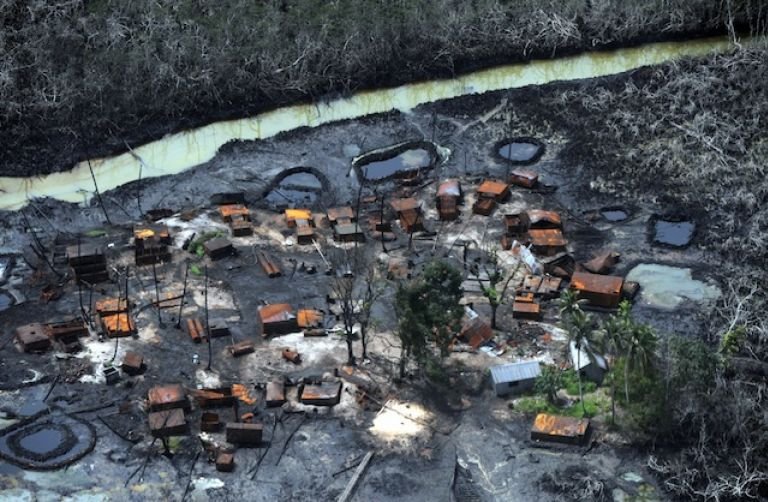
Environmental Damage as a Human Rights Question: Nigeria’s Oil Communities
A major legal paradigm shift is re-engineering environmental litigation across West Africa. Recent domestic appellate and international tribunal rulings are formally elevating ecosystem degradation, industrial pollution, and systematic gas flaring from standard commercial tort disputes into core, actionable fundamental human rights violations.
Beyond Corporate Tort Law
Historically, environmental damage in oil-producing regions like the Niger Delta was treated under standard civil property liability laws. Transnational energy extraction entities routinely delayed remediation by tieing communities up in multi-decade compensation litigations.
By applying Article 24 of the African Charter on Human and Peoples’ Rights, legal frameworks now classify an unstable, hazardous environment as a direct negation of the basic Right to Life. This structural change prevents corporate actors from shielding behind local subsidiary structures, enabling community advocates to pursue international institutional interventions based on fundamental global rights metrics.
References and Citations
African Charter on Human and Peoples’ Rights, Article 24. The Statutory Right to a Generally Satisfactory Environment.
Federal High Court of Nigeria, 2026. Precedents on Corporate Environmental Liability and Constitutional Right to Clean Lifespans, Case Ref: FHC/ND/CV/2026/04.