

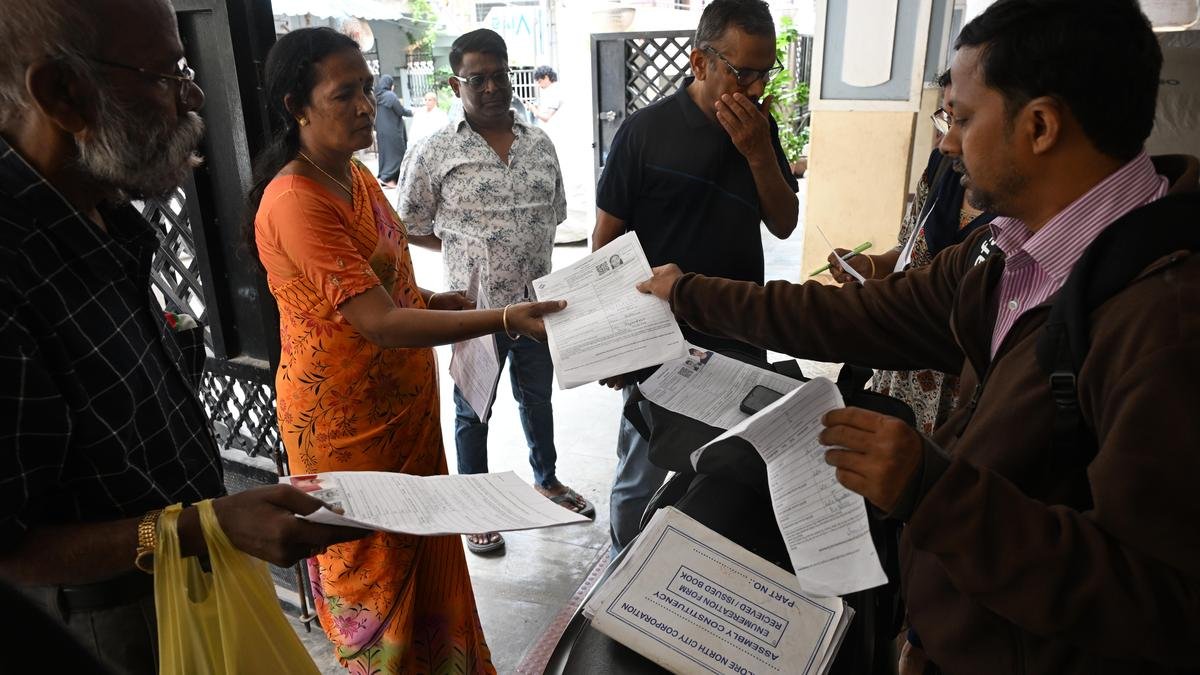
Karnataka’s Voter Roll Review — Nearly Half of Bengaluru Flagged for Potential Exclusion
Reporting from the Indian American Muslim Council’s Weekly India Human Rights Monitor indicates that nearly half of Bengaluru’s registered voters were flagged for potential exclusion under Karnataka’s Special Intensive Revision of electoral rolls in early August 2026, raising concerns about mass disenfranchisement (Indian American Muslim Council [IAMC], 2026).
An electoral roll revision that flags close to half of a major city’s registered voters for potential removal is, on its face, a scale of action that warrants scrutiny of the underlying methodology — whether the flagging criteria are applied consistently, and whether affected voters have adequate notice and a practical path to confirm their continued eligibility before any removal takes effect. The same reporting period documents a series of related concerns from IAMC’s monitoring, including a case in which a 78-year-old man was acquitted after 33 years facing charges connected to the aftermath of the Babri Masjid demolition, and government data showing a particular religious minority group has consistently filed the highest number of complaints with India’s National Commission for Minorities since 2021 (IAMC, 2026).
Viewed together, these threads — a large-scale voter roll revision, a decades-long wrongful prosecution only now resolved, and a sustained pattern of minority discrimination complaints — are presented by IAMC’s monitoring as part of a broader pattern concerning civil liberties and minority treatment, rather than as isolated incidents. This brief presents that framing as IAMC’s own characterization; an independent assessment of the voter-roll revision’s actual legal and administrative process would require review of the Election Commission’s own published methodology, which was not part of the sources reviewed here.
Given the scale reported (nearly half of registered voters in a major metropolitan area), this is a developing story with direct relevance to electoral administration and civil liberties monitoring. Coverage should track the Election Commission of India’s official response and any subsequent legal challenges, and should distinguish between the raw “flagged” figure and the eventual number of voters actually removed from rolls, since flagging processes in large-scale revisions typically involve a verification period before removal is finalized.
References
Indian American Muslim Council. (2026, August 7). IAMC weekly India human rights monitor (IHRM). https://iamc.com/iamc-weekly-india-human-rights-monitor-august-7-2026