

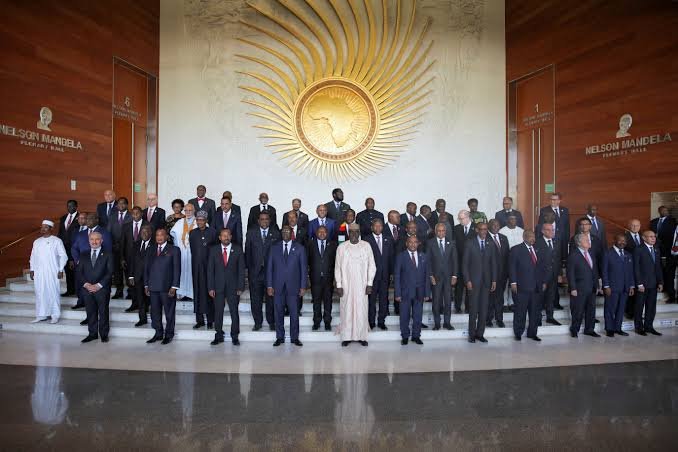
Why 54 African Governments Pushed Back on the UN
A coalition of 54 African governments issued a strongly worded joint statement criticizing the United Nations Secretary-General, as reported by the development-sector outlet Development Today (n.d.). The statement’s specific grievances were not detailed in available summaries, but its scale — spanning the near-totality of African Union member states — signals a coordinated diplomatic position rather than an isolated dispute.
A joint statement of this breadth typically requires substantial prior coordination, often through African Union channels, suggesting the underlying grievance reflects a shared continental concern rather than a bilateral disagreement between the UN and any single government. Statements of this kind commonly cluster around a small set of recurring themes in UN–Africa relations: representation and voice in Security Council reform discussions, the distribution and conditionality of development and humanitarian financing, and dissatisfaction with the pace or framing of UN engagement on African-led peace and security initiatives.
This development sits alongside a broader pattern of donor retrenchment (see Brief 1) and a general climate of “renewal of purpose, priorities and power dynamics” in development cooperation, as characterized by the OECD’s 2026 programming (OECD, 2026). A joint African government critique of the UN Secretariat, occurring at the same moment aid budgets are contracting and international institutions are under legitimacy pressure, is consistent with a broader push by recipient and middle-income countries to assert greater agency in institutions historically shaped by donor-country priorities.
Given the limited detail available in current reporting, the responsible editorial approach is to treat this as a developing story requiring primary-source follow-up — ideally the text of the joint statement itself or an African Union communiqué — before drawing firm conclusions about its substantive content. What can be stated with confidence is the structural context: a coordinated multi-government critique of UN leadership arriving during a period of funding contraction and institutional strain is a governance signal worth tracking closely, regardless of its specific triggering issue.
References
Development Today. (n.d.). Home. Retrieved August 9, 2026, from https://www.development-today.com/
Organisation for Economic Co-operation and Development. (2026, May 12). The future of development co-operation [Event]. https://www.oecd.org/en/events/2026/05/the-future-of-international-development-co-operation.html